Mod 3 MySQL Online Assignment
Module 3 Overview

Module 3 built upon our learning of HTML/CSS, and PHP by teaching us about MySQL, which allowed us to create database connections to our webpage. Learning MySQL is important, because it allows us to organize data into databases, rather than just simple files that are located randomly. This enables us to design complex applications where users can interact with data. In addition, MySQL is an open-source software, which is important because it allows us to collaborate with other developers and save money from other proprietary database software. These cost savings can then be passed on to our clients and employers that we create these applications for.
For this module, I found Bucky's 33-part MySQL tutorial on thenewboston.com to be the best source for teaching me MySQL. Bucky's tutorial is very long and detailed, making it perfect to follow along with step-by-step. In addition, Bucky tells a lot of humorous anecdotes that helps lighten the mood in between teaching MySQL.
For this assignment, I completed all 33-parts of Bucky's tutorial and included a summary of the topics he introduced, as well as pictures of the database, commands, and queries used during his tutorial via the PHPMyAdmin utility on my hostgator cPanel, which you can find below.
Selected Artifacts


MySQL Online Tutorial
- SHOW and SELECT to show data in a table
- DISTINCT and LIMIT to limit query results
- Sorting with ORDER BY
- Wildcards and Regular Expressions to customize a query
- INSERT INTO, UPDATE, and DELETE to modify table data with a query
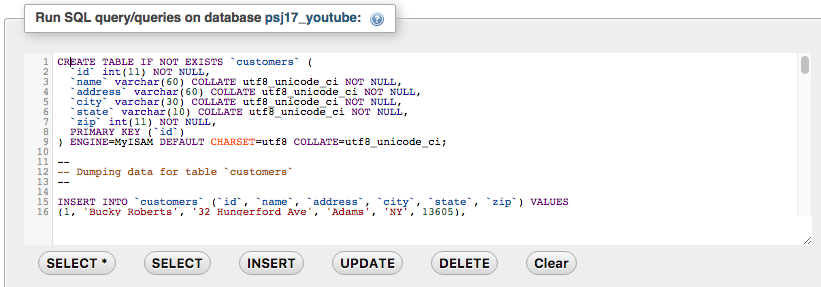
Using customers.sql on phpAdmin to create Customers table:
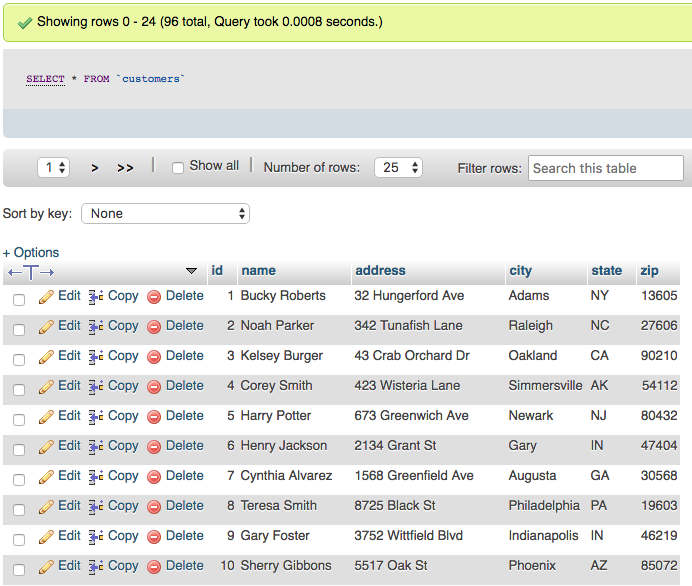
Customers table after running customers.sql:
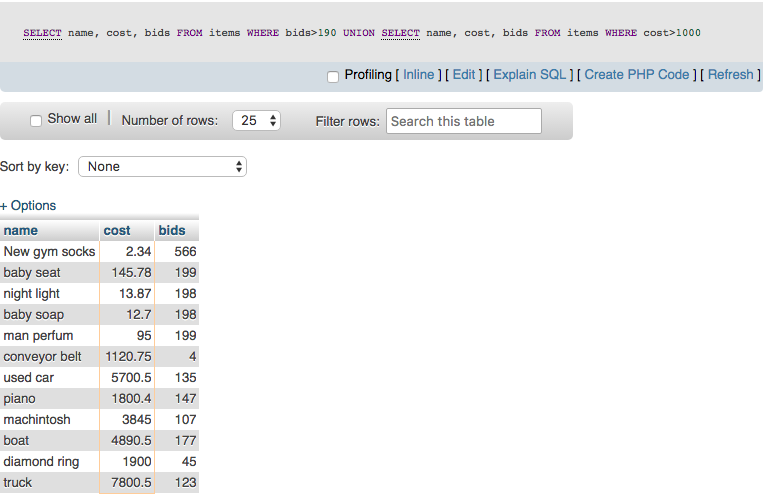
A union query that shows all items that have 190+ bids or cost $1,000+